
After a pleasant two-day sail to the Andaman Islands we found ourselves in the depths of a bureaucratic paper dump. Immigration, customs, the coast guard, and the harbor master each have at least 20 pages of required documents that must be copied, signed, and stamped accordingly. These include, but are not limited to, passport copies, visa copies, crew lists, equipment lists (including number of sunglasses and serial numbers of computers), boat registration, itinerary, etc, etc.
Before departing Thailand we realized that entering India would not necessarily be a welcoming or easy process. Unfortunately, in the last year India has passed new laws that no longer allow one to simply mail in a passport to the embassy. In order to obtain a visa, we first had to make a run to Bangkok.
India now requires the collection of “biometric identifiers” before the embassy will grant you a visa. In theory, these identifiers are in place to help track visitors while they travel through India. In reality, this means that you have to physically hand in your application so they can take a mug shot and scan your fingerprints. While this seems like a stringent new policy, none of the airports are set up with the software to process the additional information. They are collecting data that wont be used for at least another year.
Even with the help of a local agent, Mr. Rathnam, the whole process to enter the country was substantially long and bureaucratic. The departments, of course, don’t talk to each other, so the coast guard was surprised to learn that customs had confiscated our satellite phone. This put a huge damper on entering India as this phone is used in case of emergencies and also is used to download weather data and emails. In many other places data networks or internet is readily available. Unfortunately India is one of the worst connected countries in the developing world, so when the phone was confiscated they essentially tied our hands. This is a new regulation in the last year. Apparently a Pakistani boat with explosives was in Indian waters when it was allegedly detonated with a sat phone.
Because of this particular incident any boat entering India now has even more loops to jump through.
While customs was surprised to learn that our sat phone was confiscated, the coast guard had a huge issue with our PROBE radar system. This system is used at night when navigating areas with coral reefs. Once the coast guard took detailed pictures of the system and received a copy of the manual showing that the system did not have recording capabilities they seemed satisfied.
During the check in process and the duration of our stay we see the signs of a massive military presence including navy helicopters, coast guard helicopters, army aircrafts, coast guard boats, police boats, navy warships, and more. At one anchorage we witnessed an exercise with a coast guard boat to our stern and a navy warship out towards the sea.
Furthermore, the Andaman Islands are a vacation destination for higher ranking military and government employees. Once you reach a certain level in the Indian government you are rewarded with an all-expenses paid vacation to the islands.
So to recap: use of satellite phones are prohibited, there is a huge military presence, cell reception is spotty and internet is basically non-existent, there are many government employees on holiday and they don’t want you surveying the ocean floor.
Mom is adamant on a government conspiracy. While I am not ruling this out entirely, I think it is more likely several other reasons including: 1. India does not spend nearly enough money on infrastructure. 2. The government employs many people. 3. These people are in desperate need of a job. 4. Government jobs are probably the highest paying jobs in the area. 5. In order to show their department/position is needed, employees are extra diligent in the nuances of their job. 6. In order to keep themselves entertained in such a remote and desolate area, they go out of their way to make sure everything is in order, multiple times.
And so after 5 hours of jumping through hoops we celebrated with a beer or two. Now free to roam the island, we start our journey exploring Port Blair.
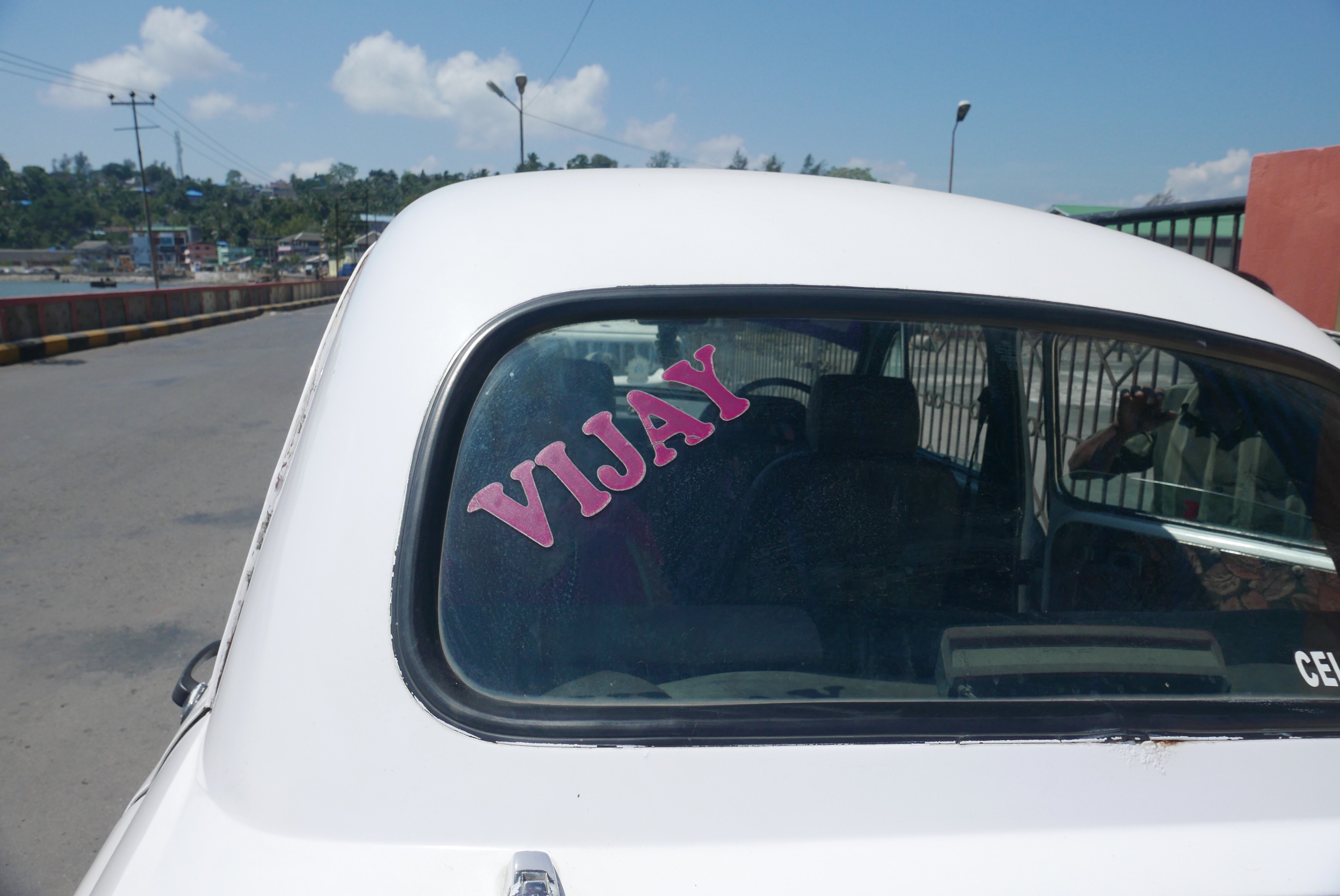
There’s a feeling within India that cannot be described, replaced, or easily transcribed. The ambiance is almost sacred as we drive around in a classic white Imperial with no air conditioning, our driver swerving to avoid the cows and trash that decorate the streets. Our driver, Vijay, is incredibly polite and helpful, and for $4 an hour he drives a hard bargain. The Indians take pride in their cars and tuk tuks, a pride that is evident on the back of every vehicle. Vijay, for instance, has his name on the front and back of his car in shiny, sparkly pink letters. His dashboard, like every other one we saw, was covered in relics of the hindu gods Vishnu, Shiva, and Ganesha. Like in most countries outside of the United States, the locals see religion as not some haphazard attempt of salvation, but as a integral part of everyday life.
Similar to the history of other territories, the Andaman Islands were originally occupied by the British, who took advantage of the desolate and extremely isolated area by establishing a prison for Indian revolutionaries. When the islands were captured by the Japanese during WII, the locals welcomed them as saviors. Unfortunately, the Japanese were more brutal than their Allied counterparts. The occupation lasted three years before the territory was handed over to India in 1947.
When the British began colonizing in the 19th century there were many native tribes living in the area, some who still baffle anthropologists to this day. There are 10 tribes of african, asian, and indian descent still in existence today, although a few are on the brink of extinction. It is still unclear as to how these tribes migrated to the area. The tribes are now settled on the Nicobar Islands to the south of Port Blair, an area that is impossible to get to unless you are an Indian national and have special permission from the government.
Described as Indian paradise, the Andaman Islands are otherwise known as India with beaches. Most tourists bypass Port Blair completely and head out to neighboring islands as soon as possible.
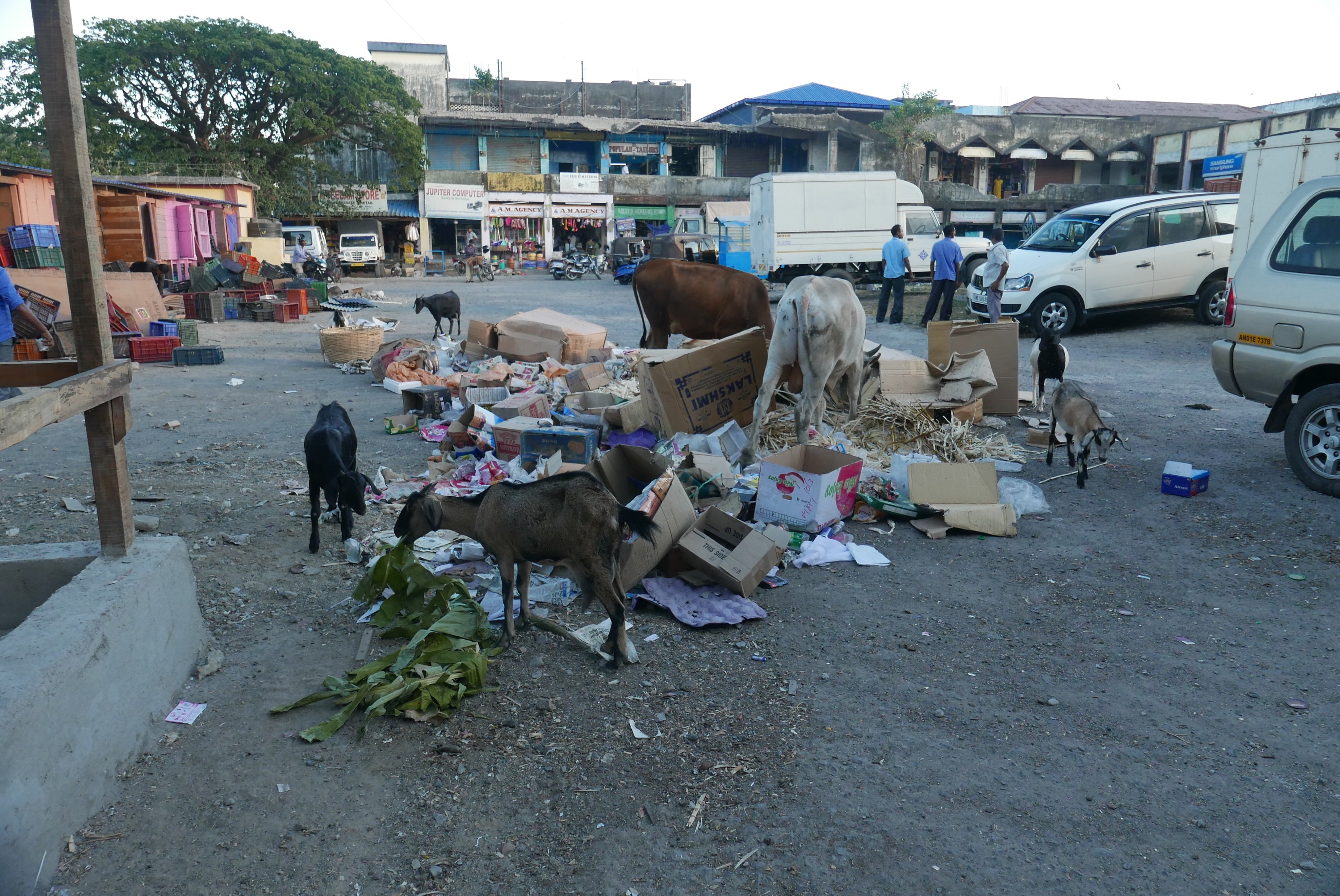
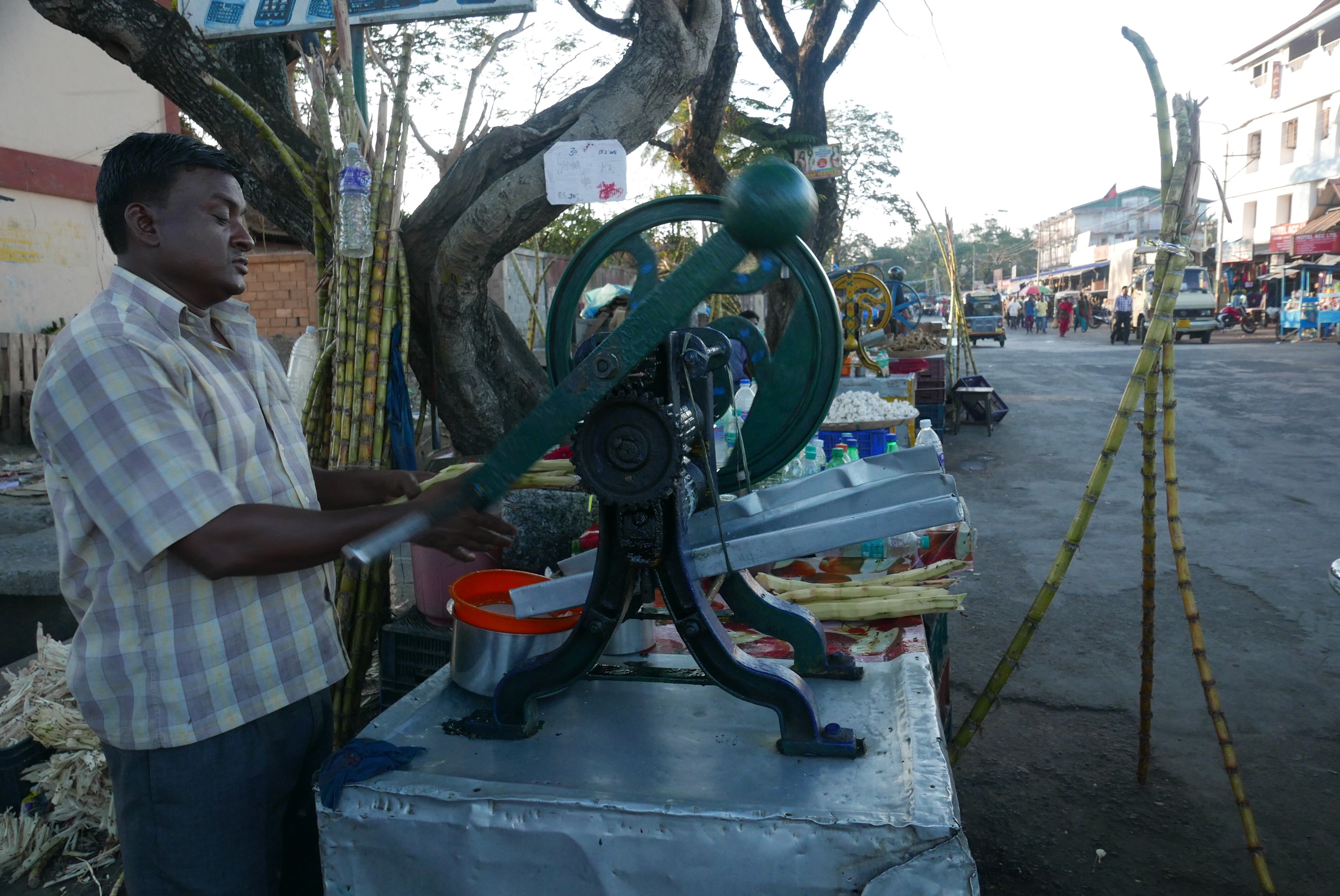
Trash is everywhere in Port Blair. Cows, chickens, goats, and dogs wander freely through the streets, consuming trash piled behind vegetable stands. Fathers and sons squeeze juice out of sugar cane while harmoniously dogging flies and bees, serving a dainty glass for 10 rupees, or 16 cents. The women are beautiful. Most are dressed in saris of vibrant colors such as mint green, fuchsia red, and sapphire blue. The needlework and accented sparkles create additional intrigue. Married women adorn themselves with anklets and toe rings and a red dot in between their eyes. The bells on the anklets jingle softly as they walk down the street.

And so we found ourselves in a completely different place, thousands of miles away from what was understood and what was comfortable.
And yet there is fascination in the unfamiliar, in the common denominators that exist underneath the acute differences. While most Indians speak a bit of English, they all understand facial expressions, in particular a smile. Their white teeth flash when they are happy, and most go out of their way to ensure polite courtesy. Even though the differences can be staggering when quantified, it is the quality of the similarities that trump everything else.
After a few days in Port Blair we picked up the anchor and headed south towards Rutland Island. We were enjoying a pleasant sail when a black navy helicopter began circling around Seachild repeatedly. At first we thought they were just checking the boat out, but 20 minutes later the helicopter was still hovering only 50 feet away from the boat. We were bewildered as to what the issue was, but became increasingly worried the longer the navy boat hovered, as our ear drums began to feel the pressure of the extremely loud helicopter blades.
Finally, we deduced that the pilot was trying to give us a set of numbers to a cell phone. Bewildered as to why he would be giving us a cell phone number instead of calling us on the VHF, we figured out the set of numbers and Dad gave him a call.
He answered his personal cell phone in the helicopter and finally took off north towards Port Blair.
He said he would be calling us back once he landed the helicopter.

 The Ginger Trek